Toe & Nail Care
When Toe Changes Disrupt Every Step
Explore hammer-toe and ingrown-toenail concerns alongside the dedicated fungal-nail treatment pathway.
01 — Understand
Structure, skin and nail can each create a different problem
The location and type of change help separate a flexible toe contracture from a nail-border concern or a fungal nail condition.

Hammer toes
We describe hammer toes as a muscular imbalance that changes the position of one or more digits.
Ingrown toenail
Pain, surrounding redness and occasional drainage may appear when a nail border penetrates the nearby skin.
Fungal toenails
Discoloration, thickening and curvature are covered in the dedicated fungal-nail laser pathway.
02 — Evaluate
Start with what is changing
Select a focus area to see how we evaluate toe and nail concerns.
Diagnostic Path
Choose a point in the evaluation
Use the tabs to review how each method contributes to the clinical picture.
See whether the toe still moves
A hammer-toe examination includes range of motion to determine whether the contracture is flexible or rigid.
Review bone and joint structure
X-rays are used to assess the structure and alignment of the foot and toes.
Inspect the border and surrounding tissue
An ingrown toenail is evaluated for border tenderness, redness and drainage; nail samples may be used for a suspected fungal infection.

03 — Treatment
Match the care to structure, border or nail
We use different treatment paths for hammer toes and ingrown toenails, while our fungal-nail program is explained separately.
Discuss Your OptionsRelieve pressure
Padding and topical pain products may be considered for a flexible or irritated toe.
Correct the border
For selected ingrown toenails, we perform an office procedure under local anesthetic.
Follow the nail pathway
Fungal nail concerns can continue to the dedicated laser-treatment page.
04 — Next Step
Bring a clear picture of the change
The condition, flexibility and timeline all shape the conversation.
Check flexibility
Notice whether the affected toe can still be straightened manually.
Watch the skin
Track redness, drainage or callus formation around the toe.
Note the timeline
Share whether the change followed trauma, footwear pressure or a gradual progression.
05 — Detailed Guide
Causes, diagnosis and treatment
Choose a condition to review the information most relevant to it.
01Fungal Toenails
Causes
Toenail fungus thrives in dark, moist environments. Trauma to the nail plate, including trimming too short, stubbing a toe or dropping something on it, can create an opening for fungal organisms. The nail may gradually become discolored, thickened, curved or painful.
Diagnosis
The examination reviews nail color, thickness, curvature and discomfort in shoes. A nail sample may be sent for analysis to identify the organism.
Treatment
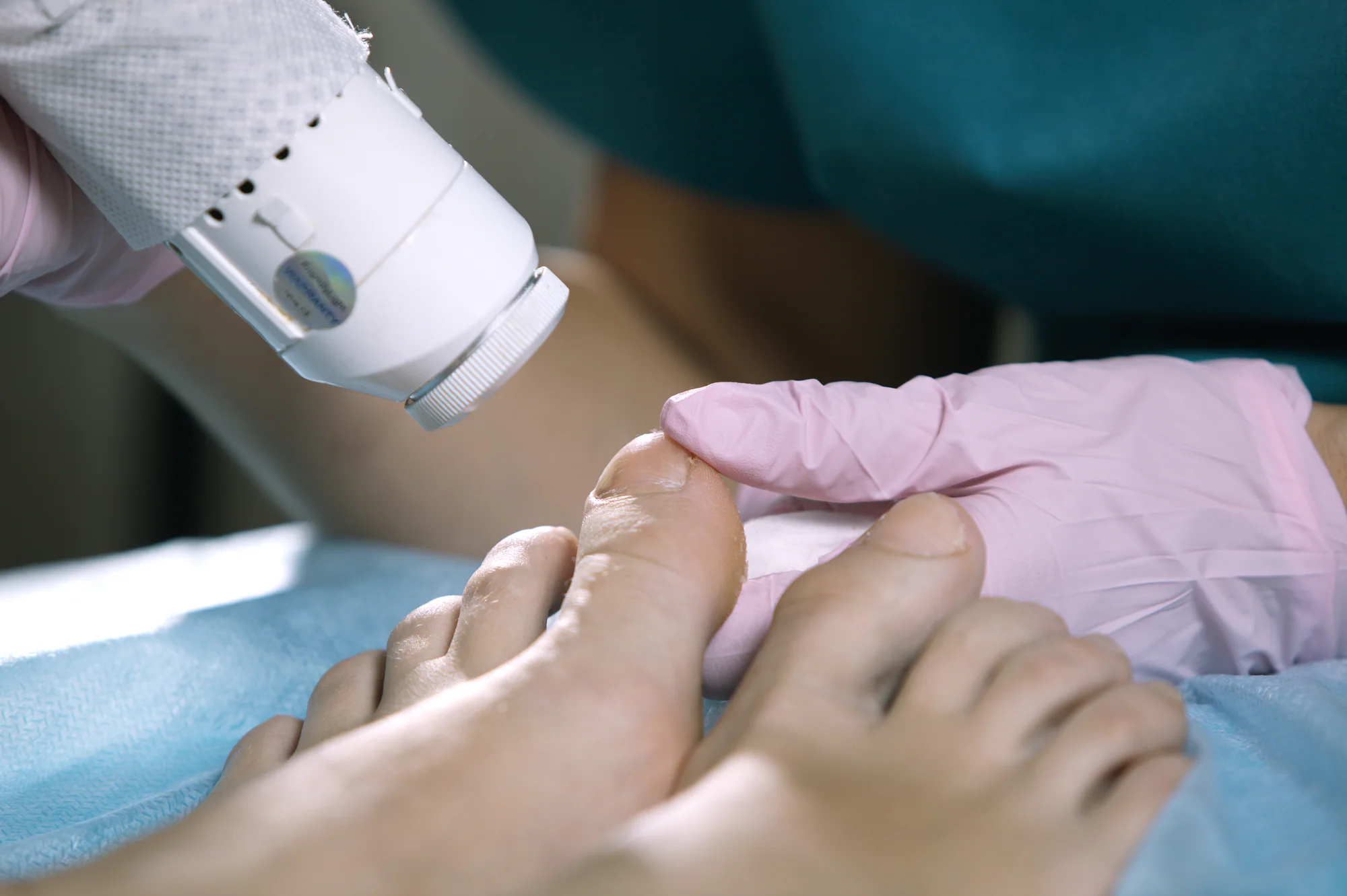
We offer a dedicated laser nail-therapy program and also review topical or oral alternatives when appropriate. Continue to the Fungal Nail Laser page for the current treatment pathway.
02Hammer Toes
Causes
Hammer toes are associated with an imbalance between the muscles that control the top and bottom of the toes, changing digit position and the way the toes stabilize the foot during walking.
Diagnosis
X-rays review foot and toe structure. The examination moves the toes through their range of motion to determine whether the joints remain flexible and checks the skin for callus formation.
Treatment
Padding and topical pain products may reduce irritation. A flexible contracture and a rigid contracture require different procedural discussions, including different recovery expectations.
03Ingrown Toenail
Causes
An ingrown toenail occurs when a nail border presses into or penetrates the nearby skin. Tight shoes, trauma, incorrect trimming, genetic nail shape and thick fungal nails may contribute.
Diagnosis
The affected border is checked for tenderness, redness and drainage. The examination also considers whether infection is present.
Treatment
We perform selected ingrown-toenail procedures in the office under local anesthetic. Aftercare instructions and follow-up are provided, and footwear pressure is limited during the initial healing period.
Take the Next Step
Bring the full pattern into focus
Talk with the team about what you have noticed, what changes it and what you have already tried.