Environment
Dark, moist footwear can create an environment where fungus thrives.
Fungal Toenail Care
Understand how fungal nails develop, how we confirm the condition and what the laser treatment program involves.
01 — Understand
Toenail fungus can involve dermatophytes or yeast and thrives in dark, moist environments such as the toe box of a shoe.
Dark, moist footwear can create an environment where fungus thrives.
Cutting a nail too short, dropping something on the toe or kicking an object may disrupt the seal beneath the nail plate and create an opportunity for fungus to enter the nail bed.
Genetics may also contribute to fungal nail infections.
The visible changes happen slowly: discoloration, thickening and curvature may develop over time.
02 — Confirm
Fungal nails commonly appear brown or white before the nail plate thickens and curves.
These changes can eventually cause discomfort inside shoes. A sample of the nail plate may be taken and sent for analysis to identify the organism involved.

03 — Treat
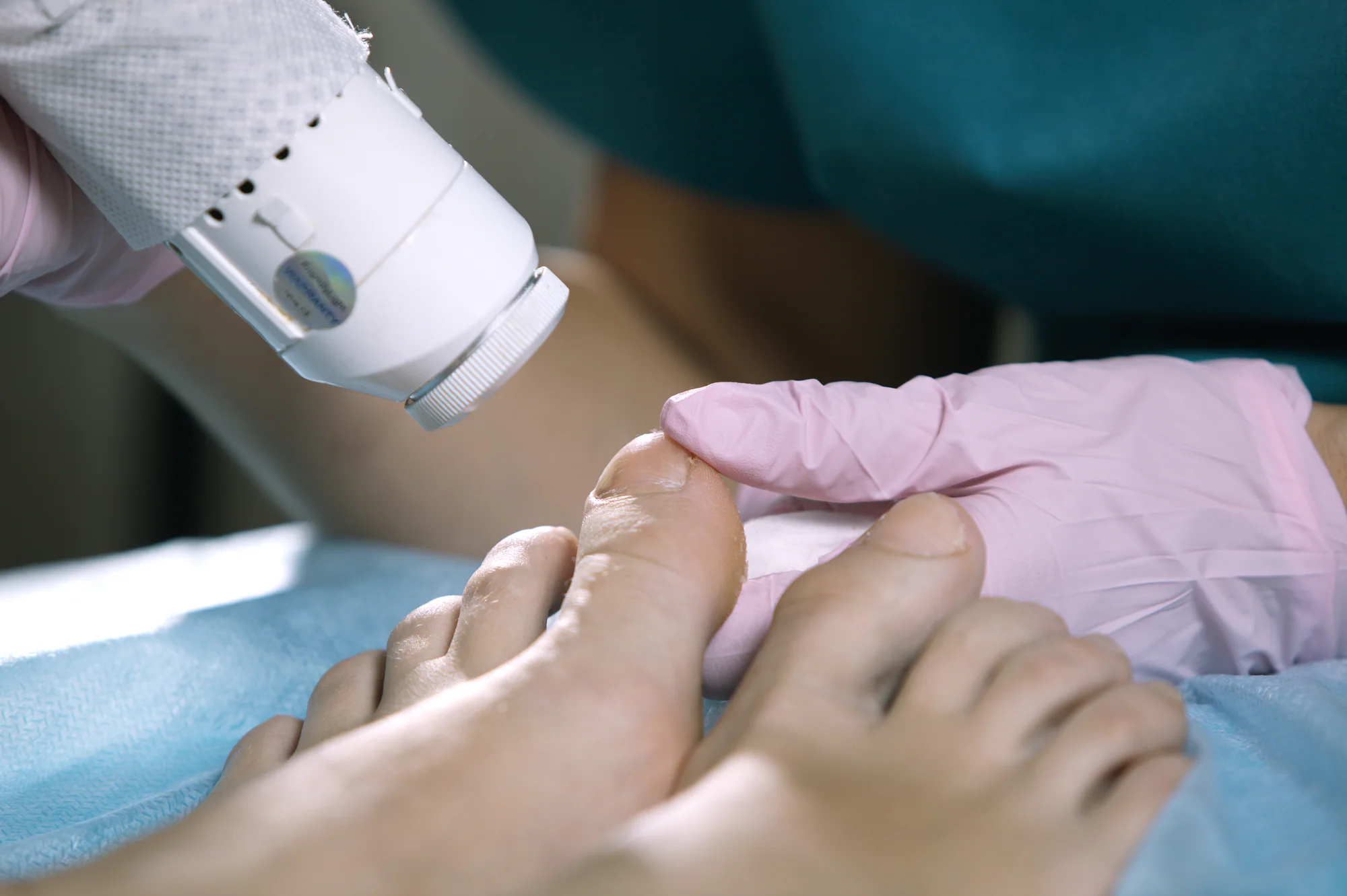
Laser nail therapy is non-invasive and painless, with continued improvement in the nail plate’s appearance over time.
3Treatment visits
10 minutesper foot
Explore the program
Use the tabs to review the treatment schedule and follow-up process.
Treatment time is approximately ten minutes per foot.
The laser nail therapy program is described as a series of three treatments scheduled four weeks apart.
Quarterly or semiannual maintenance treatment plans may be discussed when appropriate.
04 — Continue
The appearance of the nail plate can continue improving each month during the program.
A removed toenail can take nine to twelve months or longer to grow back and may still return with fungus. Nail removal is rarely necessary with our treatment protocols.
Take the Next Step
Talk with the team about visible changes, previous treatments and available evaluation options.