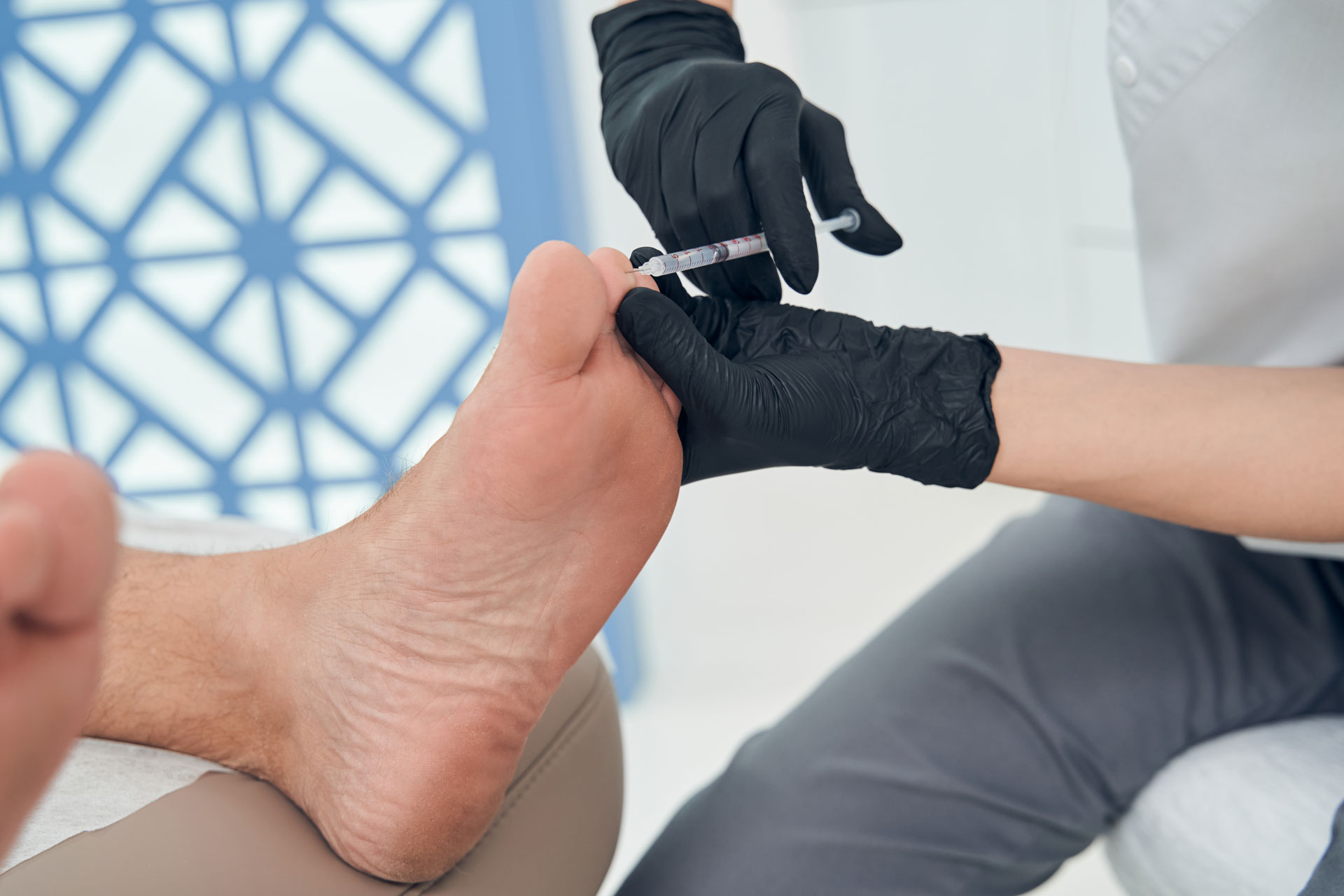
Platelet-Rich Plasma (PRP) Therapy has emerged as a groundbreaking approach in the treatment of various musculoskeletal conditions, marking a significant advancement in regenerative medicine. Particularly in the realm of foot and ankle disorders, PRP Therapy offers a promising alternative to conventional treatments, harnessing the body’s natural healing processes to alleviate pain, improve function, and accelerate recovery.
This therapy involves the use of a patient’s own platelets to enhance tissue regeneration and repair, presenting a fascinating intersection between cutting-edge technology and the body’s innate capabilities. This blog explores the scientific underpinnings of PRP Therapy, its application in treating foot and ankle disorders, and evaluates the evidence supporting its effectiveness, offering insights into how this innovative treatment is transforming patient outcomes in orthopedics.
Understanding Platelet-Rich Plasma (PRP) Therapy: An Overview
Platelet-Rich Plasma (PRP) Therapy represents a significant stride forward in regenerative medicine, offering a novel approach to treating an array of musculoskeletal disorders, including those affecting the foot and ankle. At its core, PRP Therapy utilizes a concentration of platelets derived from the patient’s own blood, leveraging the body’s natural healing mechanisms to repair damaged tissues and reduce inflammation.
The science behind PRP Therapy is both complex and fascinating. Blood is primarily composed of plasma, red cells, white cells, and platelets. Platelets are best known for their role in clotting; however, they also contain hundreds of proteins called growth factors, which are crucial in the healing of injuries. During PRP Therapy, a sample of the patient’s blood is taken and then processed through a centrifuge to isolate a concentrated mix of platelets and plasma. This platelet-rich plasma is then injected directly into the affected area, delivering a high dose of growth factors that can accelerate tissue repair and regeneration.
This therapy has garnered attention for its potential to improve outcomes in patients suffering from chronic tendon injuries, osteoarthritis, and surgical recovery, among other conditions. Its application in foot and ankle disorders, such as Achilles tendinopathy or plantar fasciitis, demonstrates promising results in reducing pain and enhancing mobility. Unlike many traditional treatments that may offer temporary relief or carry significant risks, PRP Therapy works to address the underlying causes of pain and dysfunction by promoting a more natural, efficient healing process.
In summary, PRP Therapy stands at the intersection of innovation and natural healing, embodying a shift towards more personalized and effective treatment options in orthopedic care. Its growing application in treating foot and ankle disorders underscores the potential of this therapy to revolutionize patient care in the field.
Related: Innovative Fat Pad Replacement Therapy: A Game Changer for Painful Calluses
Application of PRP Therapy in Foot and Ankle Disorders
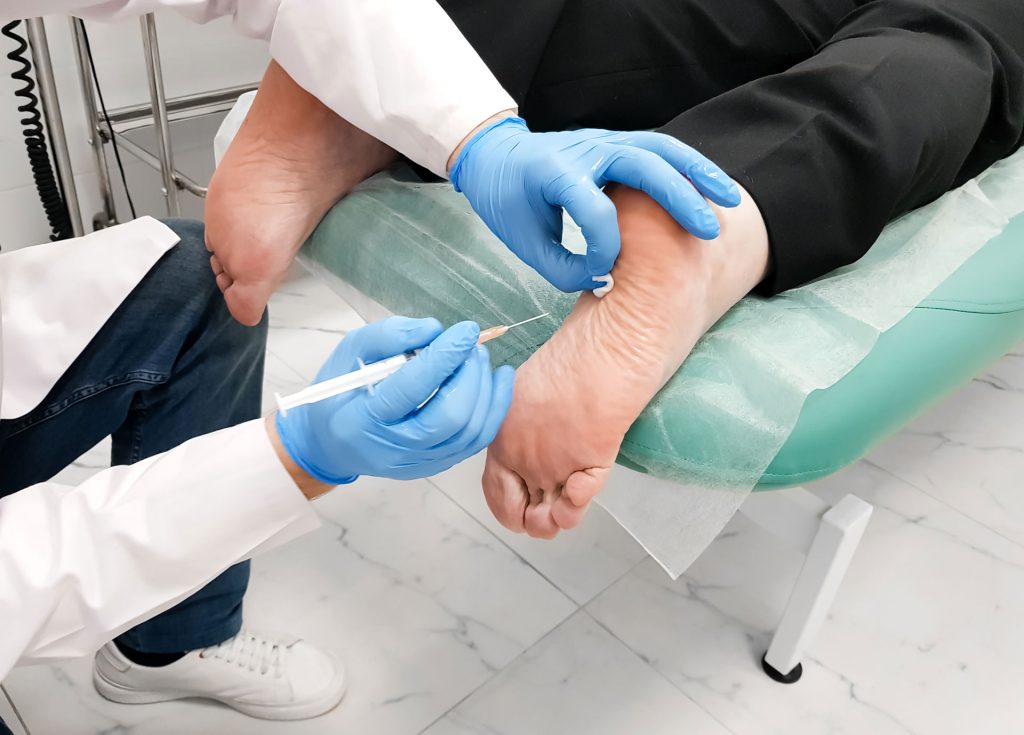
The application of Platelet-Rich Plasma (PRP) Therapy in treating foot and ankle disorders represents a pivotal development in orthopedic medicine, offering a potential avenue for patients seeking alternatives to traditional interventions. The targeted delivery of growth factors through PRP injections aims to catalyze the body’s healing mechanisms, making it particularly beneficial for a variety of conditions affecting the lower extremities.
- Achilles Tendinopathy: Achilles tendinopathy is a common condition characterized by pain, swelling, and impaired function. PRP Therapy has been shown to effectively promote healing in the degenerated tendon, potentially reducing pain and improving functionality more efficiently than conventional treatments.
- Plantar Fasciitis: This disorder, marked by sharp heel pain, often results from overuse and can be particularly debilitating. Studies suggest that PRP injections can decrease inflammation and pain, fostering faster recovery times and reducing the likelihood of recurrence.
- Ankle Sprains: PRP Therapy has also found application in the treatment of acute ankle sprains, with evidence pointing towards its ability to accelerate recovery, thus minimizing downtime and the risk of future instability.
- Osteoarthritis of the Ankle: For patients suffering from osteoarthritis in the ankle, PRP Therapy offers a promising solution to alleviate pain and improve joint function by promoting cartilage repair and reducing inflammation without the need for surgical intervention[5].
The versatility of PRP Therapy in addressing a wide range of foot and ankle disorders underscores its potential as a valuable component of comprehensive orthopedic care. By harnessing the body’s natural healing processes, PRP Therapy not only aims to relieve symptoms but also targets the underlying causes of these conditions, paving the way for durable outcomes and enhanced quality of life.
Related: Understanding the Potential of Exosomes in Podiatry
Addressing Safety and Efficacy: What the Research Says
When considering any medical treatment, questions of safety and efficacy rightfully arise. In the context of Platelet-Rich Plasma (PRP) Therapy for foot and ankle disorders, a growing body of research has begun to illuminate its potential benefits and limitations. PRP Therapy involves using a patient’s own blood components, which inherently reduces the risk of allergic reactions or communicable disease transmission, positioning it as a relatively safe intervention. However, like any procedure, it carries the possibility of localized pain at the injection site, infection, or nerve injuries, though such complications are considered rare.
In terms of efficacy, studies have produced promising results, indicating that PRP Therapy can be an effective treatment option for chronic tendon injuries, osteoarthritis, and other musculoskeletal conditions impacting the foot and ankle. A systematic review by Moraes et al. (2014) highlighted the therapeutic potential of PRP in enhancing tissue repair and reducing pain, suggesting a superior outcome in certain conditions when compared to corticosteroid injections or placebo treatments. Another study conducted by Alsousou et al. (2009) corroborated these findings, showing that PRP injections could accelerate the healing of acute sports injuries, thereby facilitating a quicker return to activity.
Despite these encouraging results, the medical community continues to call for more extensive randomized controlled trials to better understand the long-term effects and optimal application protocols for PRP Therapy. While preliminary data support its use as a safe and potentially effective treatment for foot and ankle disorders, individual outcomes can vary, underscoring the importance of personalized medical consultation and consideration.
Related: Innovative Solutions for Knee Pain: Insights from Dr. Staschiak
The Procedure: What to Expect During PRP Therapy
Platelet-Rich Plasma (PRP) Therapy, a hallmark of regenerative medicine in Lewis Center, Ohio, offers patients with foot and ankle disorders a cutting-edge treatment option designed to harness the body’s own healing capabilities. Understanding the procedure can help demystify the process for those considering PRP Therapy as a viable treatment option. Here’s what patients can expect during the PRP Therapy process:
- Initial Consultation: The first step involves a detailed assessment by a healthcare provider to determine if PRP Therapy is an appropriate treatment for your condition. This consultation often includes reviewing medical history, symptoms, and possibly imaging studies.
- Blood Collection: On the day of the procedure, a small amount of blood is drawn from the patient’s arm, similar to a routine blood test.
- Platelet Concentration: The collected blood is then placed in a centrifuge, where it is spun at high speeds to separate the platelets from other blood components. This process concentrates the platelets into plasma, creating the platelet-rich plasma used for the injection.
- Injection Preparation: The affected area on the foot or ankle is cleaned and may be numbed with a local anesthetic to minimize discomfort during the injection.
- PRP Injection: Using ultrasound guidance for precision, the PRP solution is injected directly into the injured area of the foot or ankle.
- Post-Procedure Care: Patients may experience mild soreness or swelling at the injection site, which typically resolves within a few days. Specific post-procedure instructions are provided, which may include rest and avoiding certain activities to allow the treated area to heal effectively.
- Follow-Up: The healing response initiated by PRP Therapy is gradual, and follow-up visits are scheduled to monitor progress and evaluate the need for additional treatments.
This non-surgical intervention, part of the broader field of regenerative medicine in Lewis Center, Ohio, offers a promising pathway towards recovery without the risks associated with more invasive procedures. For individuals dealing with persistent foot and ankle disorders, consulting with a Mid-Ohio Foot and Ankle Specialist can provide further insight and guidance on whether PRP Therapy is suited to their specific needs.
For more information or to schedule a consultation, consider reaching out to a Mid-Ohio Foot and Ankle Specialist, who can offer personalized advice and support throughout the treatment process.