Map the pressure point
Identify whether lost cushioning is affecting the heel, forefoot or another high-pressure area.

Fat Pad Restoration
Review the Leneva pathway for fat-pad loss and high-pressure areas, including the material, aftercare and payment considerations.
01 — Understand
We use Leneva as an FDA-approved adipose matrix for selected fat-pad restoration and high-pressure areas such as the heel, ball of the foot, bunions, corns and calluses. The material is made from donated, sterilized human adipose tissue.
01Used by podiatrists for selected fat-pad and pressure concerns
02Described as a donated, sterilized adipose-tissue matrix
03Performed by our team as an in-office injection
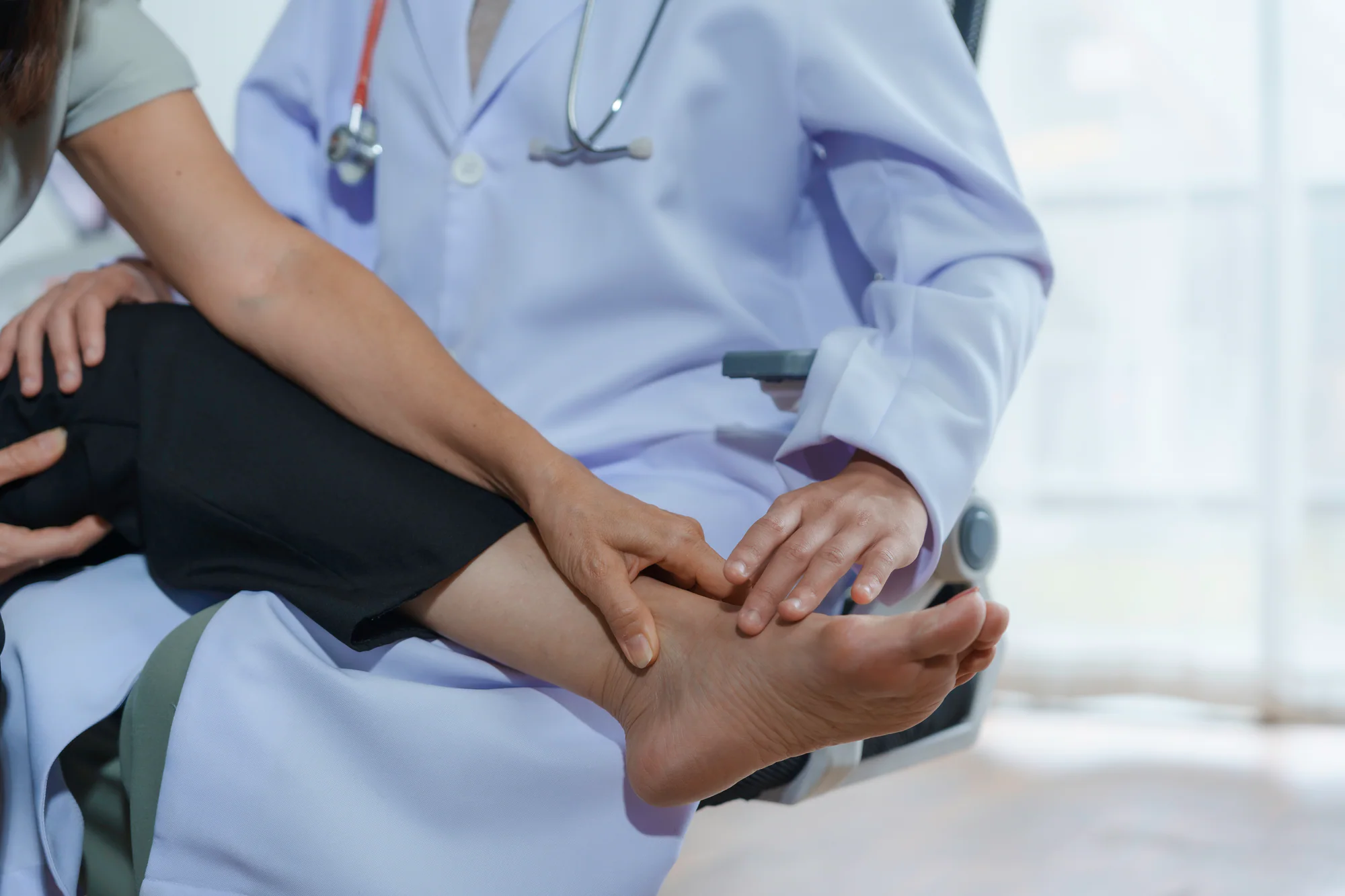
02 — Process
Treatment planning begins with the area of fat-pad loss and includes short-term protection after the injection.
Identify whether lost cushioning is affecting the heel, forefoot or another high-pressure area.
Discuss how much material is proposed, where it will be placed and what risks or alternatives apply.
Plantar fat-pad replacement is typically followed by an offloading surgical shoe for about two weeks.
03 — Questions to Discuss
This is a discussion checklist, not an eligibility test. A consultation should connect the treatment to documented fat-pad loss rather than treating every callus or heel complaint as the same problem.
1Is fat-pad loss contributing to my symptoms?
2Which pressure area would be treated?
3What footwear or offloading will I need afterward?
4What alternatives fit my diagnosis?
04 — Payment Planning
Leneva injections are not covered by insurance. Confirm the current fee, payment expectations and any follow-up costs directly with us before scheduling treatment.
Make an Informed Choice
Bring your prior care, current symptoms and financial questions into one focused consultation.