Conservative Care
Initial care may include stretching, heel lifts, arch supports, icing, anti-inflammatory creams and steroid injections.
Achilles Tendon Care
Understand why it happens, how it is evaluated and what may be recommended when conservative care has not resolved it.
01 — Understand
The Achilles helps lift the heel and propel the foot forward during walking and jumping.
That repeated pull can lead to overuse, strains, sprains and tears in the tissue. Pain may also appear after a sudden burst of exertion following a period of inactivity.
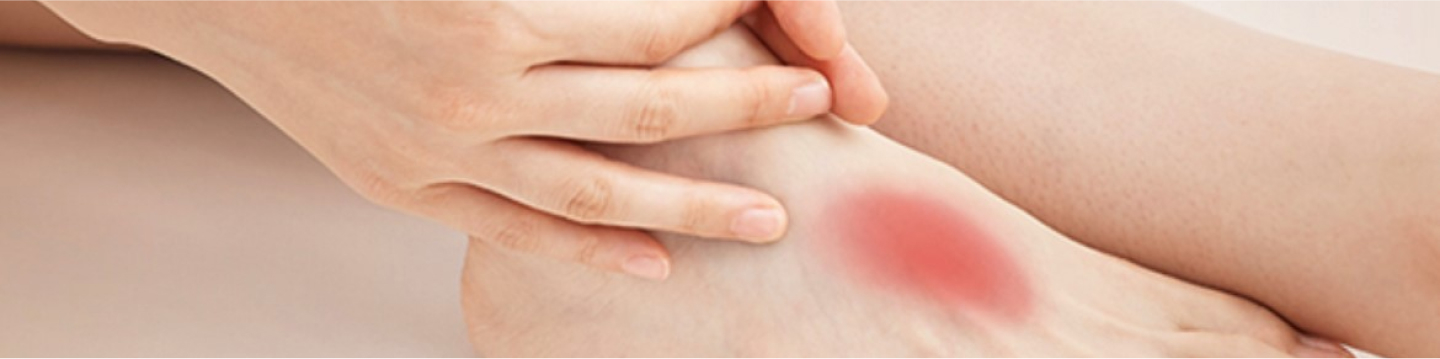
Locate the pattern
Achilles pain may occur along the tendon cord or where the tendon meets the heel bone.
The palpable cord at the back of the heel can become inflamed, and a nodule may form as a result of micro-tearing in the tissue.
Pain may occur at the Achilles insertion on the back of the heel bone. A prominent bump, described as a Haglund’s deformity, may or may not be present.
Patients may connect the first pain with running, exercise, footwear or simply standing up and feeling a sharp pain at the back of the heel.
02 — Identify
An evaluation can combine a physical examination with imaging selected for the suspected type and degree of tissue damage.
Explore the evaluation
Select a method to understand what it contributes to the diagnostic process.
Palpation of the tendon cord and insertion site helps identify where pressure produces pain.
X-rays may be used to identify spurring or calcification associated with the Achilles tendon.
Ultrasound may be used to measure tendon thickness and color and to look for tearing in the tissues.
An MRI may be recommended to evaluate the level, location and degree of suspected tissue damage.
03 — Treat
Care begins with conservative measures. When those approaches do not resolve the pain, we may recommend the Orthotripsy Procedure.
The goal of treatment is not the equipment itself. It is a considered path back toward comfortable movement and normal routines.
04 — Return
The Orthotripsy Procedure follows a gradual return to activity rather than an extended period of non-weight-bearing recovery.
Patients are full weight-bearing and walking in their shoes the same day.
Plan for three days away from work and strenuous activity to allow the inflammatory process to take effect.
Activity is increased gradually over approximately one month.
Take the Next Step
Talk with the team about your symptoms, previous treatment and available evaluation options.